To Teachers

This post is dedicated to great teachers our there, in recognition of the immense responsibility you have, the difficulty of the duties required, and the great jobs you all do meeting it. We live and work in” (FKB) “an economy that rewards someone who saves the lives of others on a battlefield with a medal, rewards a

great teacher with thankyou notes from parents, but rewards those who can detect the mispricing of securities with sums
reaching into the billions.” (Warren Buffet).

This week a combination of my childrens teachers and my friend that are teachers made me realise how little the world respects them and the importance of what they do, so I post this again in hope that someone who reads it may help to make a difference in the educations system.

Danielle Bruckert: Editor

Children’s books in Different Languages

Danielle Bruckert

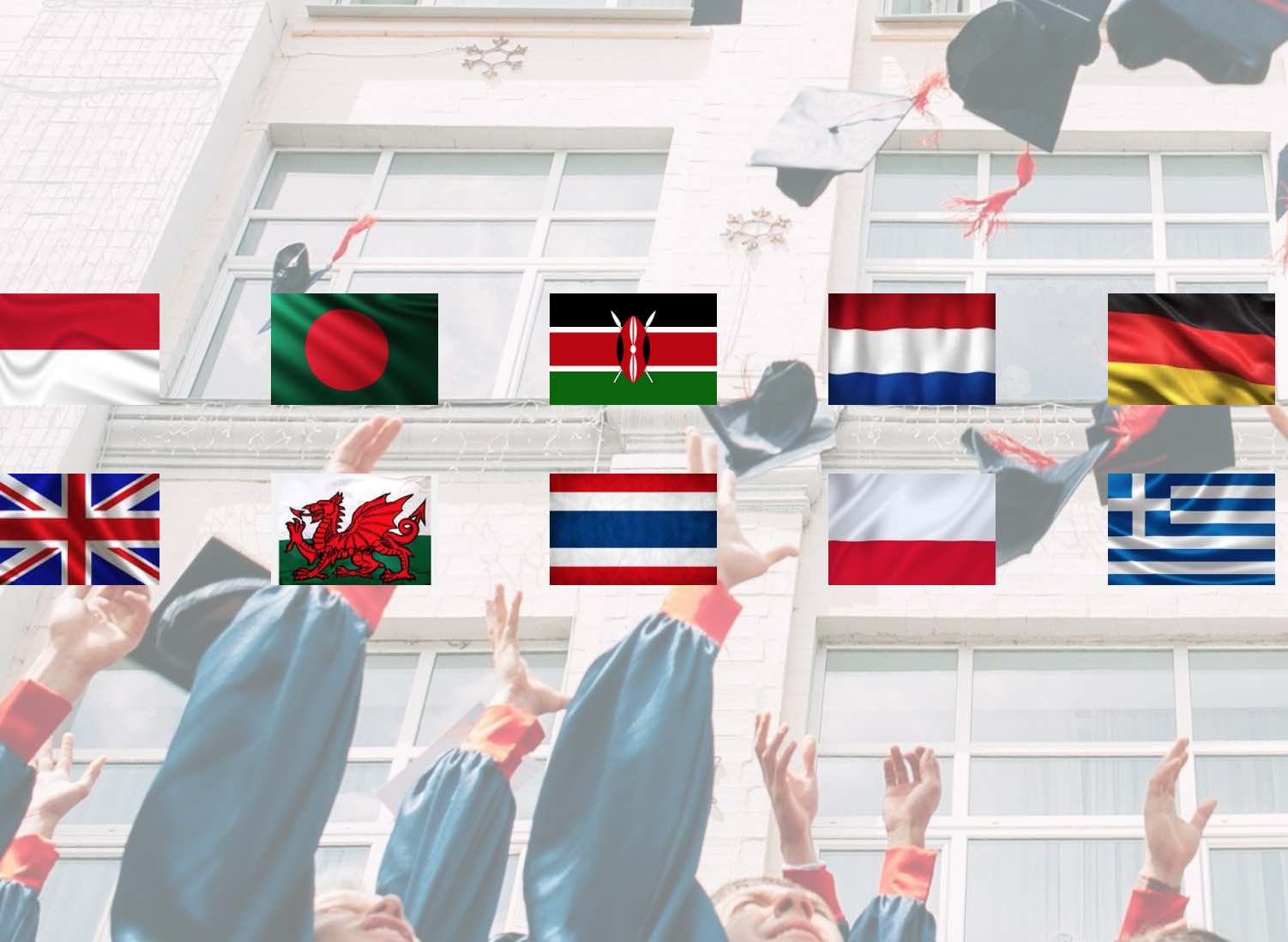
We’ve just put up Hero of the Mountain by Ivan Parvov, and I wanted to point out that this book is available number of different languages, including Arabic and German, on Ivan’s site, http://www.bubutales.com.

It is difficult enough to find good childrens books in English, and must be nearly impossible in another language. Because Ivan has made his books available for free, people have kindly volunteered to translate them, adding value to the resource provided.

One of my own books was also kindly translated by Effie Kyriakidou, a task even more difficult since it is in rhyme. http://www.lulu.com/product/paperback/bugs-by-numbers—greek-edition/16303602.

Janaki Sooriyarachchi also provides her books in both Englsh and her native Sri Lanken language, Sinhala.

Hans Wilhelm has a number of his out of print books in foreign languages at http://www.childrensbooksforever.com/

The International Childrens Digital Library, http://www.childrenslibrary.org/, also features a large number of book in different languages which are available to read online.

Anyone reading this, and enjoying our books, who has the skills, time, and inclination to translate a book, to help give back, please contact me (danielle at freekidsbooks.org) or leave a reply here, with details of the book and I will help coordinate with the author.


Free Hard Copies of Colouring Books for Kids in Need : Western Graphics

(Just to note before you start reading: If you’re looking for the free copies this post probably won’t help, but if you want to hear the story about how they came about read on:-)

Around a year ago, out of the blue, I received an email from Tim Keran at a company called Western Graphics.

He advised they are looking at printing some free books to give to schools in need for literacy awareness, (somewhere around 10,000 books!) and would I be interested in providing any of mine. I said of course, I’d love to.

They were looking for two books for 3-5 year olds, and 7-10 year olds, with text and pictures on opposing pages. We sent them two books Gecko on the Wall and The Other Side, which I thought were perfect for these age groups, and universally appealling. (Here’s the colouring book links Gecko on the Wall Colouring Book, The Other Side Colouring Book, Note: our colouring books have different covers to distinguish them visually at our online store, whereas the printed Western Graphics versions have the same covers as the normal books except for the title Colouring Book.)

Being busy as we all are, after a little two and from; some revisions for American English, (I asked an American proof reader to review these, and she, hearing about the project, and how it will help kids in need, also provided editing services for free,(-Faith at Have Faith Proof Reading), another reminder of all the good will people have,  and just in time for the holiday season; and some great additions, suggested by Western Graphics, for example a page for the children to write about themselves and draw a picture of themselves at the end, about a month ago, I received a soft copy of their print ready file, and then yesterday, I finallly received the hard copies.

I have to say, it was well worth the wait. The books are printed and bound well and the back cover explains the project from their perspective in full, I’ve included a picture of this text below (scroll down if you want to read it now).

It often amazes me the questions people ask! So here’s some FAQ and my answers.

What are they paying you for the books? Nothing of course! We are really happy to be involved in this, since it promotes literacy, and gets the books out there read and enjoyed by more children, and in hard copy, what could be better.

Why is it taking so long? Good things take time! Also you need to remember that social initiatives come secondary to commercial duties in a company, since if we don’t attend to business we’ll go out of it and can’t complete anything social.

Why would a company do this? Marketing is a primary reason most companies complete these initiatives, since all companies will have a marketing budget, and if you can spread the word about what you are doing while helping people it is a triple win situation – that is two for you and one for those you help. Secondary, and more importantly in this case, I believe because they care about literacy and want to help.

Where do we get the books? I am not sure how Western Graphics is allocating the books, all I know is they are working with some non-profit organisations, and I will update this post if I do hear more.

We all need to remember social responsibility, and if we are making money, why not spend some of it on others, you’ll often find, even better if it is by surprise, that there is a kick back for you in it.

Okay, enough ranting from me, here’s what Western Graphics says about the project:

Free Colouring Books for Literacy

Free Colouring Books Western Graphics Back CoverText


Post Written by Danielle Bruckert


Books on Movie

We are presently compiling a list of books on video to add to the website’s free literacy resources. In lieu of the new “movie page” specifically for this purpose, I’m collecting links here (by way of comments), and on the new category links list in the sidebar.

If you haven’t yet put your book on video, here’s my advice.

- Windows Movie Maker is free for windows users, and seems very easy to use.

- Youtube accounts are likewise easy to set up, free, and you can upload your book as soon as it is finished, there are a number of other similar sites too which are valuable for countries where youtube is banned, for example Turkey.

- It’s my feeling ideally to be a good resource for reading, a book should have the audio along with the words, and to best display the author and illustrator’s work a visual of the picture which matches the page being read. This is easier said than done, and each picture book format will require different formatting to achieve this. However this type of format will enable a read along, and aid comprehension for ESL or EAL students.

-This link resource is aimed at picture books, an audio list will be included for chapter books later

Comments on this from teachers or people working in early literacy education would be appreciated.

Any book which is free online in it’s full version is acceptable for submission to be included in this resource.

I’ll look forward to “seeing” some more books read here!


More on How Free Stuff can Help Sales

By Danielle Bruckert

Here’s a link to a blog which expands the ideas we’ve reported in the post on ‘Why Free?’ (http://freekidsbooks.org/blog/2011/02/why-free/):

http://www.bookbuzzr.com/blog/book-marketing/12-ways-to-market-your-book-by-giving-away-free-stuff

There’s some great food for thought, and some good marketing  ideas for authors.


And here’s my take on why I give my books away:

1. Everyone believes their book is good, but is it really? Only one way to find out, share it with the audience and if they like it they’ll tell you.

2. I had fun making the books, and I want people to have fun reading them, the easiest way to get the largest amount of readers is to make them free.

3. I firmly believe in the economy of free – give something away and it will return to you many times over!

4. A good children’s book needs to be in hard copy for children to enjoy, that is I have no fear of diminished sales from free e-books, as if people like the books they will buy the hard copy.

5. It’s just good!

I hope you’ll take a chance to look through the books on this site and if you like them, leave some FEEDBACK! If you really like them, follow the link next to the one for free download to buy a hard copy for your child or as an original present for a friend’s child.


Bugs by Numbers in Greek

We’re proud to announce a foreign language edition of Bugs by Numbers, a book available from Free Kids Books by Danielle Bruckert.

Bugs by Numbers has kindly been translated into Greek by Effie Kryiakidou. The download can be found here:

http://www.lulu.com/product/paperback/bugs-by-numbers—greek-edition/16303602


Methods of Reading – It’s All About the Child

Further to the discussion on reading methods, I’ve found this answer from Paula Bright very refreshing. From my own experience teaching technical skills, mainly one on one with adults, I find this approach works best too. Whilst a student who learns easily can be taught by any method and will still succeed, a struggling student is the challenge, and, in my own experience and field, a the ultimate challenge of a good teacher is to adapt to meet the child’s needs so the learning outcomes are achieved in the shortest time. This also leaves me wondering as to what levels and higher capabilities all children could achieve if they all received this type of training. Of course this may not be possible in the main stream school systems, however, like the continual drive for zero accident rates in my (aviation)  profession, we can all, as parents, teachers, and writers, and facilitators, play our part in working towards this ideal.


This is what Paula has to say about learning to read:


I’ve found that anyone saying that one thing works and another doesn’t hasn’t met the kids who are truly lost and struggling to find meaning. Or if they have, they didn’t know it.

• I’ve used images in letters to help some succeed.

• I’ve used motion and action (kinesthetic) to help. Dancing, arm motions, bending into shapes, creating body words with other children.

• I’ve used finger signals to conquer it.

• I’ve used drawing to overcome difficulties.

• I’ve used music to make the difference for some children.

• I’ve used a typing program that teaches reading at the same time to beat the failure, causing the brain to relate to the fingers, to the sound. This is one of the MOST amazing to me! I advocate this program with all my heart. It works so QUICKLY!

• I’ve used discussion and finding what the child doesn’t “get” to solve the problem. Not everything is as difficult as we sometimes assume. :)

• There are many other ways. My students now are all non-readers, kids who fall through the cracks, kids who can’t keep up with peers, and kids with a huge variety of other reading issues. I teach them online.

My point? To advise ONE method for struggling readers is never the best solution. Learn them all. Use them all. Something will click, and there’s not always a way to know in advance which that will be.

I know that not every teacher can do this. We all have lives.

As a classroom teacher, I spent a lot of time at night preparing things for the non-readers and poor readers.

Now, because I was injured and partially blinded, I was lucky enough to invent my own online reading studio! I’m in heaven. I work from home, as I must, and yet am still teaching. Happiness!

I was a classroom teacher, and I know the difficulties. Yet to proclaim that one knows “the” way to address issues? It’s ignoring the fact of the extremely wide variations between kids and learning styles.

People assume so much when they believe fervently in something. I never, ever had a class where EVERY child could learn from phonics, or where EVERY child could learn from whole language and all that accompanies it. They’re both vital, and both play a role in creating a well-rounded reader.

I do not mean to offend with this post! I hope you’ll take it in the spirit it is meant: The more a teacher knows, the more children will succeed and triumph.

If a teacher is married to his or her beliefs, they will lose some kids along the way.

I hope I can find more teachers like Paula in my children’s schools, and as a parent I’m glad to have learnt a little more about reading approaches from her.

More of Paula’s reading resources can be found at http://yourchildwillread.com and http://www.facebook.com/yourchildwillread.


Methods of Teaching Reading Skills

My daughter is now approaching learning to read age, and it’s an exciting time for me.

After posting a query about learning letters at  LinkedIn (http://www.linkedin.com/groups/What-do-people-think-about-1483117.S.52638577?qid=fa002577-a7f3-40a8-a076-db5d80cde5b2&trk=group_most_popular-0-b-ttl&goback=%2Egmp_1483117, and also http://www.linkedin.com/groups/Id-love-discuss-lifelong-reader-1483117.S.57821186?qid=fa002577-a7f3-40a8-a076-db5d80cde5b2&trk=group_most_popular-0-b-ttl&goback=%2Egmp_1483117

Through this, I’ve been involved in some great discussion that opened up some really interesting ideas. This also led to the discovery there is a huge debate about the different methods of learning to read.

As a result, I’ve just added a link to http://www.phonicsinternational.com/, and a sample file from their website, which explains complex sounds, many of which I’d completely forgotten about.  And to http://www.rrf.org.uk/resources.html where there are some really great resources there, which explain more about phonics than I ever remember learning. These resources are really great for parents and children’s writers to become familiar with.

I’ve also done some more research into the whole word method, and Glen Doman – who’s foundation promotes starting whole word recognition as a baby. The important thing I’ve learnt, primarily from his adversaries is, it may or may not work, but as long as it’s fun for you and the child (which is a primary aim of the method), and is backed up later by a solid phonics program, it can do no harm. You will know as a parent whether it works or not. And backing up with phonics is also an element of the reading method posted previously, as far as I understand.

I personally feel the words may work much better with very young readers who don’ understand the abstract concept of letters, but have the ability to recognise a pattern, but I also think that regardless of initial method, readers need to learn the letters and the sounds, i.e phonics.

I also think as a parent, you can work on a special method of combining what works for your child with fundamentals, to support the education they’re receiving. A situation that only works for one on one training, where what the enjoy most and learn most from can be used more often.

But regardless of what you do, any help you provide is not only quality sharing time, it has to be better than leaving them at the mercy of an underfunded and overcrowded education system.

Anyway, this approach has seemed to work for us so far, and also led to a new idea for an alphabet series, The Happyface Alphabet….my daughter has given it the big thumbs up, which to me is the most important thing, and also feedback so far very positive, so watch this space!

Reading by Whole Word Recognition

I asked a query recently on a literacy forum about letter recognition, as my understanding was it is the first step to reading. This lead to a whole lot of new discoveries. One is the ‘whole word recognition’ concept.

Helena Rogers, and expert in this method, provides resources on her site, www.reading revival.com, here’s what she has to say about the method.

“When I started  teaching in the 1960s, the method of choice to teach children to read was through ‘whole words.’  There were lots of reading schemes with this approach to choose from in those days and I might add that reading levels were so high that people from all over the world sent their children here to be educated. (I think they are more likely to send them to Korea now!)  We expected a child to be able to read within their first term at school and to be fluent within a year. The only children leaving Primary School unable to read were ‘Special Needs’ children who went on to special schools for specialist help.

I have been using this method of teaching reading ever since and when all the ‘whole word’ reading schemes died out, I developed my own – but I improved on all those original schemes, ironing out any problems,  so that my scheme now works very efficiently with all children – even those with special needs.  It is now available to anyone via our web site: www.readingrevival.com .  My aim is that we get back to the days when all children could read within a term of entering school – and it can be done with Reading Revival.”

Further reading on the topic led me to discover Glen Doman and his work, who I believe popularised the concept to main stream in the 60′s, supporting what Helena says above, after developing the methods from studies into assisting brain injured children. More on this soon.

However in the mean time, from what I’ve read and seen, although the technique initially surprised me,  proof is in the results, and in this I have to support Helena and her initiatives, and ask -why are children now leaving the education system with inadequate reading and writing skills? And what can we as parents do to help our children?

I think Helen’s tools are a great way to start, and a small investment for a right to reading competency.

It would be great to hear from anyone out there with personal experience in this method.


Reading Methods for Children

I’ve been delving into literacy resources, as my daughter approaches ‘traditional’ reading ready age, and found a few really interesting concepts out there.

Here’s a summary of a couple of the sites I found interesting:

http://icanreadsongs.org – Learning using songs as an anchor.

http://www.newparadigmreading.com – Letter recognition using kinetics (hand signals that match the sound, for example – saying the sound “mmmm” while rubbimg tummy for learning ‘m’. The program includes games and music. Looks very interesting.

http://www.readingrevival.com – Teaching by word recognition prior to letter recognition, I’ve stumbled onto some research on this, so more about it in another blog shortly.

I say ‘traditional’ reading ready, as I figured she’s ready since she can recognise complex shapes, pays attention and understands the that the squiggle next to the apple is a letter, but really research I’ve seen says they were capable of this a lot earlier than we think.

This site is aimed both at supplying fun and quality reading resources, and promoting literacy, so on the second note, more soon on the learning to read.


RSS Syndication