Every parent wants the same quiet win: a child who reaches for a book without being asked.
But between packed schedules, tight budgets, and screens that are always within arm’s reach, building a consistent reading habit can feel harder than it should. The good news is this: literacy doesn’t require a giant home library or a perfectly curated curriculum. It grows from small, repeatable rhythms—and from making books feel accessible, meaningful, and emotionally safe.
This guide offers a balanced approach: how to use free books strategically, how to make read-aloud time more effective, how to match stories to developmental stages, and how a few carefully chosen personalized books can deepen engagement without turning reading into a shopping exercise.

Why Reading Aloud Still Matters
Reading aloud isn’t just bonding time. It is one of the most evidence-supported early literacy practices available to families. The National Institute of Child Health and Human Development’s summary of the National Reading Panel findings highlights reading aloud as a key practice for building vocabulary and comprehension foundations in early literacy (Put Reading First).
Programs like Reach Out and Read (Mendelsohn et al., Pediatrics) have also documented improvements in language outcomes when caregivers read with children consistently.
Parent Note: Ten minutes a day is enough. What matters most is frequency. A short, daily reading ritual is often more effective than occasional long sessions.
When reading becomes predictable—after dinner, before bed, or during a quiet reset—it starts to feel normal rather than negotiable.
Using Free Books the Smart Way
Free digital libraries and printable books are a gift for families building habits on a budget. But the key is to use them intentionally.
- Length: Can your child stay with the story comfortably without melting down? Start short and scale up.
- Pattern: Repetition builds confidence and prediction skills (“I know what comes next!”).
- Interest: Motivation matters more than theme. If your child loves trucks, read trucks.
Re-reading is not regression. Familiar stories free up mental energy so children can notice new words, sequencing, and cause-and-effect patterns.
Reading Insight: If your child requests the same story repeatedly, that repetition is building fluency and emotional comfort around books—two big predictors of long-term reading habits.
 Let the Environment Do the Work
 Let the Environment Do the Work
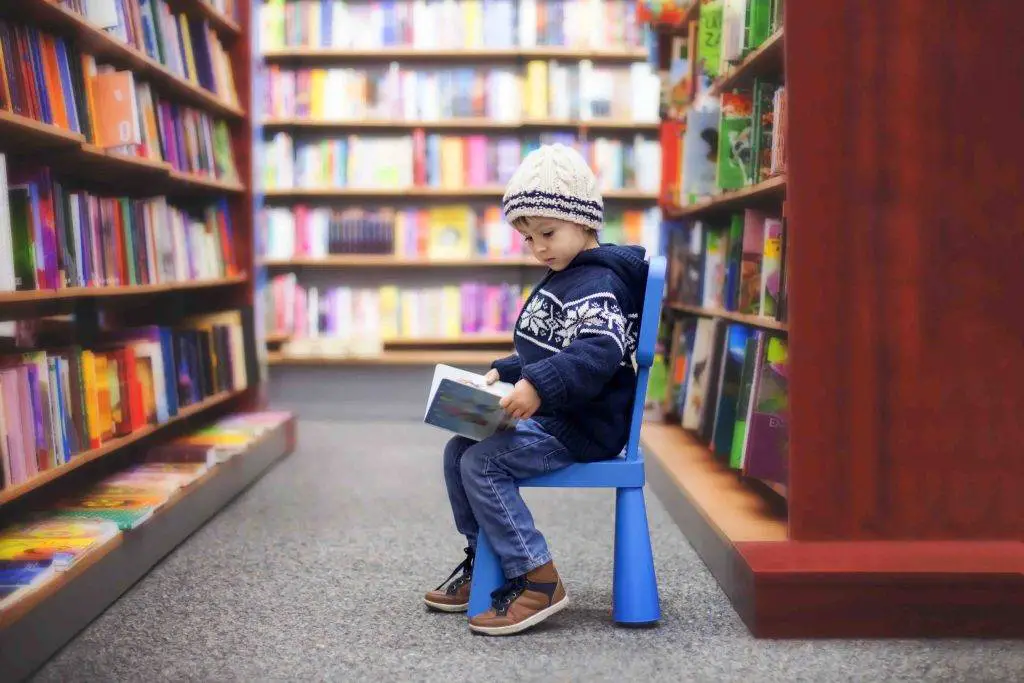
Children gravitate toward what is visible and reachable. If books live on high shelves, reading becomes adult-controlled. If books are stored at eye level, in a basket or low shelf, reading becomes an independent choice.
A simple setup can shift behavior quickly:
- Display 6 to 10 books at a time.
- Add a small rug or cushion to mark a reading spot.
- Rotate weekly, but keep one favorite always visible.
Quick Win: Put books lower than you think you should. Accessibility is one of the fastest ways to increase child-initiated reading.
How to Read in a Way That Grows Language
Reading aloud becomes more powerful when it includes light interaction. Research on dialogic reading and shared book reading suggests children benefit when adults add brief prompts and responsive conversation during story time (Kucirkova, 2014).
You don’t need to turn story time into a quiz. Just add small moments:
- Name and point: “That’s a lighthouse.”
- Ask one real question: “Why do you think the bear is hiding?”
- Connect to life: “Remember when we went to the beach?”
Simple Shift: Replace rapid-fire questions with one meaningful prompt. You’ll get deeper language without interrupting the story.
Matching Books to Developmental Stages
Frustration with reading often comes from mismatch, not ability. Here’s a quick guideline:
- Ages 0–2: Board books, rhythm, repetition, short sessions.
- Ages 2–4: Clear sequences, big emotions, predictable plots.
- Ages 4–7: Longer narratives, humor, problem-solving, early chapter books.
Free books are ideal for experimentation. If one doesn’t land, you move on—no regret attached.
The Role of “Forever Books” in Reading Identity
Volume builds skill. Emotion builds attachment.
Children often return to certain stories because they feel personally meaningful. Psychologists describe something called the self-referential effect—people engage more deeply with information connected to themselves. Research examining personalized children’s books has found increased engagement and recall when stories include familiar names or details (Kucirkova et al., 2014).
This is why some families choose to include a small number of personalized books for kids alongside free reading materials. These titles don’t replace daily reading volume. Instead, they often become emotional anchors—stories children request repeatedly because they feel uniquely connected to them.
Reading Insight: Repetition driven by emotional attachment strengthens fluency and print familiarity more effectively than repetition driven by obligation.
Within that category, some titles become keepsakes—especially when the story feels thoughtfully produced rather than novelty-based. For families looking for curated examples, options like I See Me personalized storybooks are often used as milestone gifts rather than everyday replacements.
The goal isn’t to commercialize reading time. It’s to reinforce identity. When a child sees themselves reflected in a story, reading begins to feel personal—and that feeling quietly strengthens long-term motivation.
If Your Child “Won’t Sit Still”
Stillness is optional. Engagement is the goal.
- Allow quiet movement: A fidget, gentle rocking, or sitting on a cushion can help.
- Use short bursts: Two five-minute reads can beat one ten-minute battle.
- Follow the child: If they linger on one picture, that’s still reading work.
Mindset Note: Don’t measure success by posture. Measure it by connection. Attention grows over time when books are associated with calm, not conflict.
A Simple Weekly Rhythm
If routines feel overwhelming, go small:
- Monday to Thursday: One short new story + one favorite repeat.
- Friday: Child chooses any book (including the same one again).
- Weekend: One longer read with two or three conversation pauses.
This balance of novelty and familiarity supports both cognitive growth and emotional comfort.
The Real Goal
The purpose of reading at home isn’t performance. It’s identity. When a child begins to think, “I’m someone who reads,” everything else becomes easier: vocabulary, comprehension, confidence.
Start small. Pick one predictable moment. Choose one book. Repeat. That steady rhythm, more than any perfect plan, is what builds lifelong readers.