Playgrounds do more than entertain. They teach cooperation, persistence, and problem-solving in a language children understand. When adults treat play as serious learning, the swings and slides become laboratories where curiosity and confidence grow.
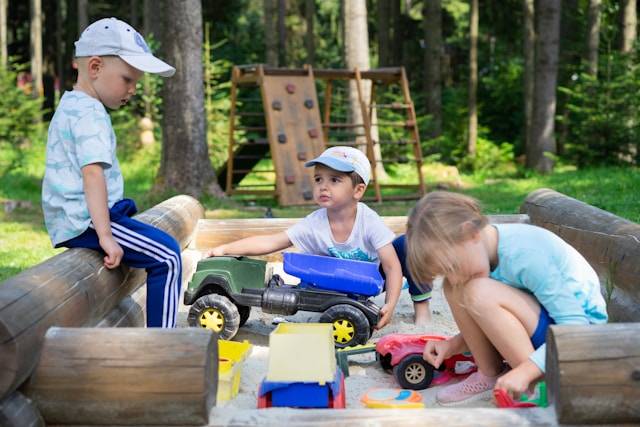
The Playground as a Silent Teacher
Children read environments long before they read words. A playground’s layout quietly tells them what is possible, who belongs, and how long to persist before trying a different route. When structures invite multiple ages and abilities, kids learn that variation is normal and collaboration is welcome.
A slightly higher step asks for courage while a nearby handhold signals safety. When adults observe without hovering, children experiment with balance, timing, and turn-taking. The result is a steady loop of hypothesis, attempt, feedback, and retry.
Design Signals That Teach Belonging
Design is the first teacher in any play space. Wide transfer platforms, low gradients, and sensory panels say come as you are. In that moment, children are practicing empathy and spatial awareness without a worksheet or lecture.
For children with disabilities, families can make their own playground. They can search for special needs playground equipment that fits every child and their sensory profiles. When equipment welcomes wheel users, vision differences, or sensory seeking, peers learn to adjust games in real time.
Designers can stack the deck by pairing high-energy zones with calm nooks so children can retreat and return. Teachers amplify the lesson by naming what they see: you made space, you offered a turn, you asked what would help.
Movement as the First Literacy
Before children write letters, they write with their bodies. Cross-lateral climbing patterns wire the brain for later reading and math, and whole-body vestibular input primes attention for group time. The hidden curriculum says practice matters, and practice should feel like joy.
When a ramp invites a scooter, a spinner tempers arousal, and a set of steps builds sequencing, kids absorb order without the pressure of perfection.
Adults can amplify this learning with simple routines. Start with a warm-up loop to wake up gross motor pathways and end with a cool-down lap for regulation. Layer small challenges across weeks, so children experience growth they can feel.
Simple movement prompts educators can rotate:
- Touch 3 textures, then balance on a line.
- Count 10 steps up, narrate 10 steps down.
- Roll a ball through 2 tunnels, then trade roles.
Mental Health in Motion
For young children, regulation lives in the body first and the mind second. Spinners, swings, and rocking seats offer rhythmic input that can calm or organize a dysregulated nervous system. A child who melts down indoors may find their footing after five minutes of swinging, and rejoin peers with a reset window for learning.
Teachers can plan for this by mapping sensory zones just like lesson plans. A high-energy circuit channels big feelings into safe effort, while a quiet corner with gentle textures offers a break without stigma. When routines make space for movement, children learn that feelings are manageable and support is normal.
Playgrounds teach, whether we plan for it or not. When we shape them with intention, they become daily lessons in courage, cooperation, and care. The payoff is a generation that learns early to make room for one another and keep building places where everyone gets to play.