 There’s a moment most teachers recognize instantly. A child picks up a book, flips three pages, puts it down, and reaches for a tablet. It’s not that kids hate reading. It’s that reading, the way it’s often presented, feels passive. Sit still. Follow along. Answer the questions at the end. That format hasn’t changed much since the 1970s, and the kids haven’t changed either. They still need to move, create, argue, build, and make things with their hands to actually learn something.
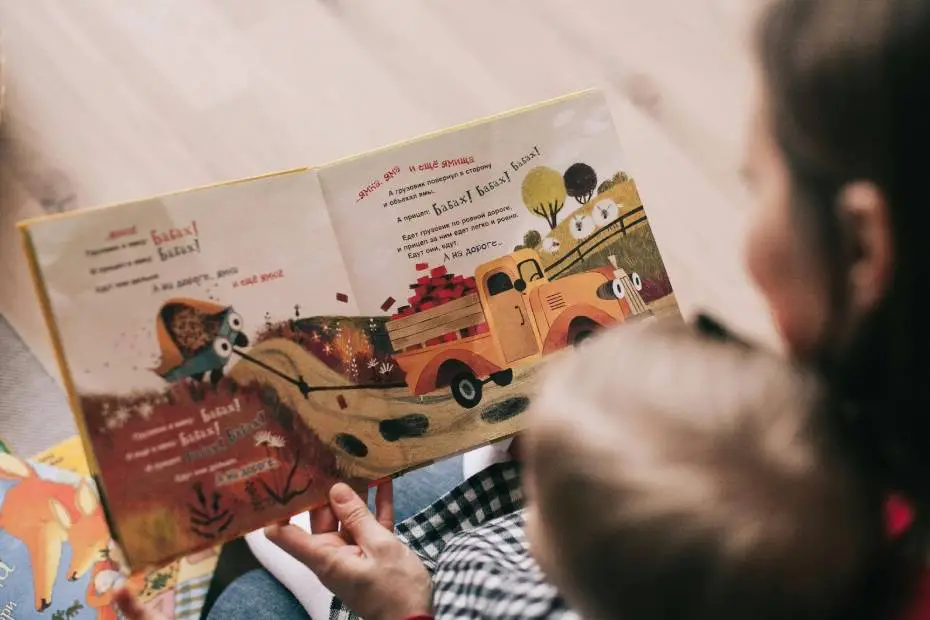
Kids books, especially picture books and early chapter books, are underused tools. Most adults see them as a step toward “real” reading rather than as complete creative learning experiences in their own right. That thinking is worth questioning.
Why Kids Books Work Differently Than Textbooks
A well-designed children’s book does something a textbook almost never does: it earns attention. The illustrations carry meaning. The rhythm of the sentences is deliberate. Mo Willems, Jacqueline Woodson, and Jon Klassen build stories where what’s not said matters as much as what is. That gap, between text and subtext, is exactly where learning lives.
Research from the University of Michigan’s literacy development program has shown that narrative-based reading, especially when paired with creative follow-up tasks, improves both comprehension retention and expressive language skills in children ages 5 through 11. The story format activates parts of the brain that rote instruction doesn’t reach.
This is why creative learning activities for kids that use books as their starting point tend to produce more durable results than worksheet-based approaches. The book becomes a launching pad, not a finish line.
Some parents, overwhelmed by homework loads, have searched for shortcuts. Older students sometimes hire someone to write a paper when the pressure gets too high. But the early years are different. No shortcut replaces what happens when a 7-year-old turns a picture book into a puppet show. The learning in that process is irreplaceable.
That said, the demand for custom writing help among high schoolers and college students keeps growing, which says something about how disengaged students become when learning feels like a transaction rather than an experience.
Activities That Actually Work in Practice
The following kids book activities for students are organized by skill area. They’re not theoretical. Teachers and reading specialists have run versions of these in real classrooms, often with minimal materials. Most work best as reading activities for elementary students, though several scale up easily for middle school with the right book choice.
1. Story Mapping With Sticky Notes
This one works for ages 6 and up. After reading a picture book together, students use sticky notes to map out the beginning, middle, and end on a blank wall or poster board. Each note gets one idea: one event, one feeling, one question.
What makes it effective is the physicality. Students can move the notes around, argue about where something belongs, and see the structure of the story as a visual object rather than an abstract concept. It builds sequencing skills, narrative comprehension, and, quietly, early writing structure.
Good books for this: The Very Hungry Caterpillar by Eric Carle for younger kids, or Hatchet by Gary Paulsen for upper elementary.
2. Character Hot Seat
A student picks a character from the book and sits in a designated chair, the “hot seat.” Everyone else asks the character questions, and the student answers in character, improvising based on what they know from the text.
This is one of the strongest creative ways to teach kids with books because it forces close reading. To stay in character, students have to understand motivation, setting, and consequence. It also builds public speaking confidence in a low-stakes environment.
3. Book-to-Blueprint Projects
Students read a book that features a location, a tree house, a ship, a fantastical school, and then design a blueprint or model of that space. The Magic Tree House series by Mary Pope Osborne works well here, as does Holes by Louis Sachar.
This bridges literacy and spatial reasoning. Kids who struggle with traditional reading comprehension often shine at this kind of task.
4. Alternative Ending Writing
After finishing a book, students write a new ending. Simple concept, high yield. The constraint is that the new ending must stay consistent with the characters as written. Students can’t suddenly make a cowardly character brave without explanation.
Teachers who use this regularly report that students start paying closer attention to character details earlier in the book, because they know they’ll need that information later. That’s a reading strategy developing organically.
Worth noting: there’s been a recent uptick in students reaching for a free ai essay writer when given open-ended writing prompts. For younger students, the antidote to that impulse is an activity that’s genuinely interesting, one where the creative decision belongs to them and couldn’t be outsourced even if they tried.
5. Vocabulary Theater
Pull 8 to 10 new words from the book before reading. After the reading, small groups write and perform a short skit using all the words correctly in context. They can be funny, dramatic, or completely absurd. The only rule is the words have to make sense where they land.
This is among the most effective learning activities using picture books because it transforms vocabulary acquisition from memorization into application. The words stick because they were performed, not just defined.
A Note on Book Selection
The book matters. Not every children’s book is equally useful as a teaching tool. The best ones for these activities tend to share a few qualities:
| Quality | Why It Matters |
| Strong, distinct characters | Gives students material to analyze and inhabit |
| Some unresolved tension | Creates space for discussion and alternative endings |
| Visual storytelling (for picture books) | Supports activities that blend image and text interpretation |
| Language slightly above reading level | Stretches vocabulary naturally within a supported context |
| Cultural or emotional specificity | Builds empathy and generates genuine conversation |
Librarians at the New York Public Library and the Multnomah County Library in Oregon publish annual curated lists specifically for classroom extension activities. Those are worth bookmarking.
What Gets in the Way
The honest obstacle here is time. Teachers are under curriculum pressure, and parents are tired. The idea of running a character hot seat after dinner sounds great until it’s 7:30 PM and homework hasn’t been touched.
The fix isn’t to do every activity. It’s to pick one and do it well, repeatedly, across different books. Students who do book-to-blueprint projects with three different books over a semester develop stronger spatial-narrative thinking than students who do all five activities once and move on.
Repetition with variation is the principle. The book changes. The skill deepens.
Where This All Points
There’s a tendency in education conversations to treat creativity as a bonus, something added after the “real” learning happens. But the evidence points in a different direction. A 2019 meta-analysis published in the Journal of Educational Research reviewed 47 studies on arts-integrated literacy instruction and found consistent positive effects on reading comprehension, motivation, and writing quality across age groups.
Creative ways to teach kids with books aren’t a workaround. They’re a direct route to exactly the skills reading instruction is supposed to produce. The difference is that students don’t experience them as instruction. They experience them as play with a point.
That distinction, between a child who reads because they have to and one who reads because something interesting is going to happen afterward, is worth building deliberately. It starts with a book and a sticky note, or a hot seat, or a blueprint drawn in crayon. It grows from there.
The best reading programs aren’t built around the best books. They’re built around what happens after the last page.