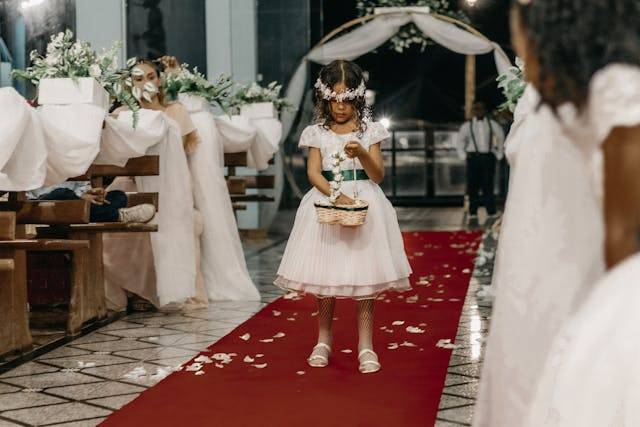
Kids notice when something big is happening, and weddings? Weddings are some of the biggest celebrations that exist. And kids know this, even little ones. Including them – your own children, nieces, nephews, or close friends’ kids – helps them feel like they’re part of that “bigness.”
Still, meaningful involvement is tricky. Planning timelines and budgets does not land with a seven-year-old. But art and crafts do! They translate abstract ideas into something kids can touch, shape, and own.
If you can make your wedding a shared project rather than a grown-up production only, you’ll help them feel not only included, but proud, too.
Art as a Way In, Not a Side Task
Art is a creative and emotional outlet, both for adults and children alike. But for kids, especially, creative activities help support expression and social learning, doubly so when they’re practiced in group settings.
For weddings, art works because it offers choice within structure. You set boundaries (colors, size, purpose) and children bring the rest. That balance mirrors how teams function, which is part of the lesson here. When kids contribute visually, they also learn how individual effort fits into a larger plan (a core idea in collaborative learning research from organizations like UNESCO).
Start small and visible. Assign projects that will actually appear at the event. Kids read meaning into that fast.
Signs, Banners, and Message Pieces
Handmade signs stay popular for a reason. Kids can letter “Welcome,” “Cards,” or “Dance Floor” with markers, paint pens, or collage elements. Maybe even draw something. To keep quality high without killing creativity, limit the palette and font styles ahead of time (two colors, one lettering guide taped underneath). That constraint teaches design thinking without calling it that.
Older kids can draft layouts first, then transfer the final version. You get cleaner results. They get a sense of process.
Invitation Design as a Learning Moment
Invitations explain how events are announced and organized. That concept fascinates kids who like structure, and it especially clicks with teens who lean toward tech or visual design.
So let them explore layouts, icons, and spacing together using examples of modern wedding invitations. Tools like Canva let kids test ideas quickly while you guide choices around readability and tone.
Talk through why certain details matter, like date placement, clarity, hierarchy. That’s real-world communication design, not just decoration.
Color Themes and Visual Decisions
Children enjoy choosing, but unlimited choice overwhelms. So present three curated color combinations and ask them to vote or refine. That turns taste into discussion. Why does one feel calmer? Why does another feel festive?
This approach mirrors how designers work with clients and helps kids learn to justify decisions, not just state preferences. Teachers often use this technique in classroom art critiques because it builds reasoning alongside creativity.
Mini Craft Stations with Purpose
Offer small projects tied to the event: table confetti shapes, favor tags, or simple paper florals. Each task should have a clear end use and a realistic time window. Fifteen focused minutes are better than an open-ended hour.
Rotate stations if you have multiple children. Responsibility grows when each station has a name attached (“Alex handled the tags,” etc). Ownership matters more than perfection.
Adults as Guides, Not Directors
Parents and educators play a specific role here: set constraints, model respect for the work, and resist the urge to “fix” everything. Research shows that overcorrection (or worse, discouraging comments) shuts kids down faster than quiet guidance.
Display their finished pieces. Credit them publicly. And yes, accept a few wobbly edges.