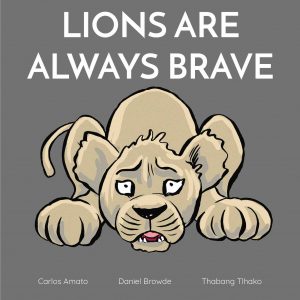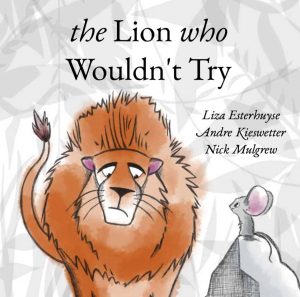
In the Lion Who Wouldn’t Try is a story about trying, we see a story of a lion who is too afraid of failure to attempt anything. All the other animals are having fun, while the lion is moping around. He is too afraid of losing that he never ends up having any fun. This book is a perfect early reader, with lots of repetition and simple language, while teaching an important emotional lesson.
Another great free creative commons picture book for young children and beginner readers, or ESL learners, brought to us by BookDash.
Check out more books like this in our BookDash Category.
Check out more books about behaviour in these categories: Emotions, Behaviour, Values.
Questions to ask Young Readers about The Lion Who Wouldn’t Try:
Why shouldn’t we be afraid of losing?
What happens if we don’t try new things?
Start a discussion about the benefits of trying new things, and how we can’t get good at stuff unless we practice, nearly everyone isn’t good the first time.
Text from The Lion Who Wouldn’t Try – A story about trying
It was a sunny day in the jungle. All the animals were out playing.
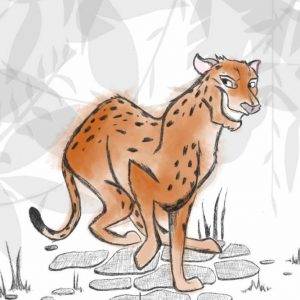
“Come play with me, Lion,” said Cheetah. “Catch me if you can!”
zoom-zoom! went Cheetah.
“I don’t want to play,” said Lion. “I’ll lose.”
“Come play with me, Lion,” said Elephant. “We can throw rocks!”
ka-pow! ka-pow! went Elephant.
“I don’t want to play,” said Lion. “I’ll lose.”
“Come play with us, Lion!” said the monkeys. “Who can eat the most bananas?”
pop! pop! pop! went the monkeys.
“I don’t want to play,” said Lion. “I’ll lose.”
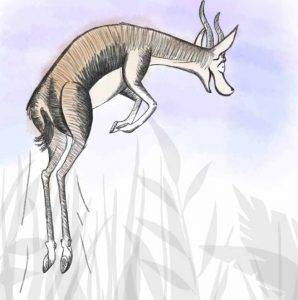
“Come play with me, Lion,” said Springbok. “Let’s jump high!”
zoop! zoop! zoop! went Springbok.
“I don’t want to play,” said Lion. “I’ll lose.”
“Come play with me, Lion,” said Crocodile. “It’s a swimming competition!”
splash! splash! went Crocodile.
“I don’t want to play,” said Lion. “I’ll lose.”
Elephant and Crocodile had the swimming competition without Lion.
Crocodile was quicker than Elephant, but each time Crocodile got ahead, Elephant tickled him!
tee-hee-hee! went Elephant and Crocodile.
Lion sat sadly by himself, watching Crocodile and Elephant swim.
“Why are you sad, Lion?” asked Mouse.
“Because I don’t want to play,” said Lion. “I’ll lose.”
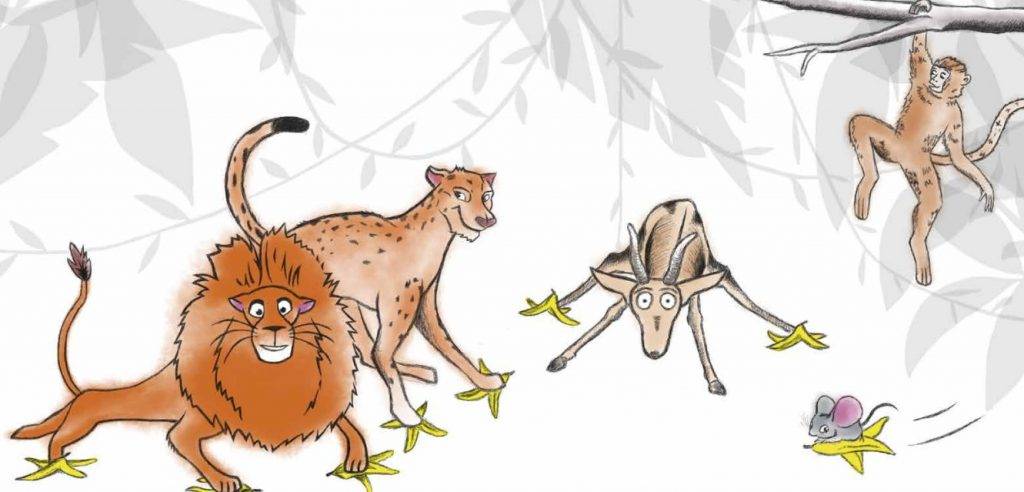
Lion slipped on a banana peel!
wheeeeee! went Lion.
“That looks like fun!” said all the other animals.
Lion played,
and he was happy.
<End of Text from The Lion who Wouldn’t Try>
If you want to read along to this book, see the following video:
Read more books by Bookdash in our Bookdash Category.
Summer Learning Doesn’t Have to Happen Indoors - Every summer the same worry surfaces. The kids are off school for weeks, the worksheets gather dust, and a small voice in every parent’s head whispers that they’re falling behind. The instinct is to drag everyone back to the kitchen table. But a lot of the most useful learning a child does over the summer ...
Healthy Screen-Free Activities for School-Aged Children - Ask any parent what they’d change about their kid’s week and screen time is near the top of the list. The screens aren’t going away, and pretending otherwise is a losing game. The realistic goal isn’t zero. It’s building a life so full of better options that the screen stops being the default. That’s a ...
How Physical Activities Help Reluctant Readers Develop Focus - If you’ve got a child who’d rather do anything than open a book, you’ve probably been told to just keep reading with them. Sometimes that works. Often it turns reading into a battle nobody wins. The thing parents rarely hear is that the path back to the page sometimes runs through a court, a field, ...
Beyond Reading: Activities That Build Confidence in Children - Reading matters. No argument there. But if you’ve ever watched a quiet kid light up after landing a trick or hitting a target, you’ll know that confidence rarely grows from books alone. It grows from doing hard things and surviving them. The page teaches a child to think. The wider world teaches them they can ...
7 Ways to Prevent the Summer Slide at Home - Summer break is a joy for the 50 million schoolchildren nationwide, but the downside is that it imposes a quiet academic tax on families every single year. When school doors close, the structured routine of daily learning vanishes, leaving a vacuum that often drains hard-earned classroom progress. Many students lose critical academic ground every ...
Big and Small – Fun early reader - A fun early reader featuring big and small. Perfect for learning to recognise repeat words with new adjectives. Available in pdf and editible odg, using a printing-friendly font. Text from Big and Small A ball, a ball, a big red ball. A cat, a cat, a big fat cat. A jet, a jet, a big ...
Family Bikes 2026: The Complete Guide for Parents Who Want to Ride Together - Family cycling in 2026 feels less like a “bike trend” and more like a quiet shift in how families get around. What used to be a niche lifestyle choice has become a practical, everyday alternative to the second car in many cities. Today’s family bikes are stronger, smarter, and far more comfortable than earlier generations. ...
The Two Lou’s Switcheroos - Twin antics work well until someone sees things differently. A charming story of identical twin boys who grow up trading places with each other (pulling switcheroos) in order to do twice as much as any one person could ever do. They don’t switch places to be mean to people, they’re just trying to live life to its fullest. From grade school all the way to college, the boys continue switching places! It’s all good fun and nothing changes, until they meet another pair of identical twins who help them answer the question: "Is it really OK to switch places and fool people?"
A Family and a Tree - A beautiful story based on the true story of the Rozin Family, who followed their hearts until destiny brought them to an empty piece of land in South India, where they started a reforestation project named Sadhana Forest. Today, after 20 years of work, they have established 8 centers in India, Haiti, Kenya, and Namibia, where they share their knowledge and help people living on arid lands to turn their homes into lush food forests.
Digital Language Learning Trends Making Russian Easier for Young Learners - Russian has never been considered an easy language to learn, and for young learners especially, the combination of a new alphabet, complex grammar cases, and unfamiliar pronunciation has historically made early progress slow and discouraging. Yet something has shifted in recent years, and it has less to do with the language itself than with how ...Check out more books about behaviour below
Summer Learning Doesn’t Have to Happen Indoors - Every summer the same worry surfaces. The kids are off school for weeks, the worksheets gather dust, and a small voice in every parent’s head whispers that they’re falling behind. The instinct is to drag everyone back to the kitchen table. But a lot of the most useful learning a child does over the summer ...
Healthy Screen-Free Activities for School-Aged Children - Ask any parent what they’d change about their kid’s week and screen time is near the top of the list. The screens aren’t going away, and pretending otherwise is a losing game. The realistic goal isn’t zero. It’s building a life so full of better options that the screen stops being the default. That’s a ...
How Physical Activities Help Reluctant Readers Develop Focus - If you’ve got a child who’d rather do anything than open a book, you’ve probably been told to just keep reading with them. Sometimes that works. Often it turns reading into a battle nobody wins. The thing parents rarely hear is that the path back to the page sometimes runs through a court, a field, ...
Beyond Reading: Activities That Build Confidence in Children - Reading matters. No argument there. But if you’ve ever watched a quiet kid light up after landing a trick or hitting a target, you’ll know that confidence rarely grows from books alone. It grows from doing hard things and surviving them. The page teaches a child to think. The wider world teaches them they can ...
7 Ways to Prevent the Summer Slide at Home - Summer break is a joy for the 50 million schoolchildren nationwide, but the downside is that it imposes a quiet academic tax on families every single year. When school doors close, the structured routine of daily learning vanishes, leaving a vacuum that often drains hard-earned classroom progress. Many students lose critical academic ground every ...
Big and Small – Fun early reader - A fun early reader featuring big and small. Perfect for learning to recognise repeat words with new adjectives. Available in pdf and editible odg, using a printing-friendly font. Text from Big and Small A ball, a ball, a big red ball. A cat, a cat, a big fat cat. A jet, a jet, a big ...
Family Bikes 2026: The Complete Guide for Parents Who Want to Ride Together - Family cycling in 2026 feels less like a “bike trend” and more like a quiet shift in how families get around. What used to be a niche lifestyle choice has become a practical, everyday alternative to the second car in many cities. Today’s family bikes are stronger, smarter, and far more comfortable than earlier generations. ...
The Two Lou’s Switcheroos - Twin antics work well until someone sees things differently. A charming story of identical twin boys who grow up trading places with each other (pulling switcheroos) in order to do twice as much as any one person could ever do. They don’t switch places to be mean to people, they’re just trying to live life to its fullest. From grade school all the way to college, the boys continue switching places! It’s all good fun and nothing changes, until they meet another pair of identical twins who help them answer the question: "Is it really OK to switch places and fool people?"
A Family and a Tree - A beautiful story based on the true story of the Rozin Family, who followed their hearts until destiny brought them to an empty piece of land in South India, where they started a reforestation project named Sadhana Forest. Today, after 20 years of work, they have established 8 centers in India, Haiti, Kenya, and Namibia, where they share their knowledge and help people living on arid lands to turn their homes into lush food forests.
Digital Language Learning Trends Making Russian Easier for Young Learners - Russian has never been considered an easy language to learn, and for young learners especially, the combination of a new alphabet, complex grammar cases, and unfamiliar pronunciation has historically made early progress slow and discouraging. Yet something has shifted in recent years, and it has less to do with the language itself than with how ...See other books from Book Dash:
[slide-anything id=’10447′]
Sponsored Links:
Note – if you sign up through these links, it doesn’t cost you any extra, but FKB receives a small donation, which helps us move towards our aim of
FREE Hardcopies!
All our posts are checked by Grammarly, the FREE online grammar checker (We still receive a donation even if you only sign up for the free account :-):

This site is hosted by Bluehost:

Leave a comment (it won’t be public) if you want help getting your own website cost-effectively.

Ahaa, its fastidious discussion regarding this article at this place at this weblog, I have read all that, so at this time me also commenting here.
When someone writes an paragraph he/she retains the idea of a user in his/her brain that how a user can know it.
So that’s why this piece of writing is great.
Thanks!
Thanks for sharing your thoughts about story about the
importance of trying things. Regards
Stunning story there. What happened after? Thanks!
Good way of describing, and nice post to get data on the topic of my
presentation subject, which i am going to present in school.
I help Chinese students (aged 5-7) read online. This book is good for vocabulary – animals – and doesn’t have too many words. The students enjoyed reading it
I want to teach my 5 year old to read
You are in the right place, I find for learning to read our “toddlers” category is the best place for starting, they are all simple books which are good for reading to a toddler or by a child learning to read – select this option in the tabs at the top of the page.
I like this book lol I like the pictures
the book was awesome
I like this booka because l learn english , there is easy sentence. The sentences are repeat which is nice to learn.
I asked my 5 years old if he liked reading the book and he said : Yes, because it was a nice book and the lion slipped over the banana peel which was really funny and nice.
The lion in this book is so funny! Ha!
nice book u should make more books like that
Because it is a great book, i love all the animals they are so cute! my favorite animal is all of them! They are awesome !
Its good if we are starting animal theme.Its good for language development.The key learning of this story is how play make us happy.
yes. me and my daughter had some questions and answer portion 🙂 thank you so much
My doughter liked this book very much. Because she loves lions 🙂
My son really liked this book. Thanks for posting!
Good book
Yes I liked the book
Kids can learn words of animinals.
wonderful stories
I liked the book, because the Lion had fun at the end of the story.
i wante to learn and speack english very good
you’re in the right place, we have books for all levels it will help your english – see the sort at the top for reading levels by age (toddlers, children, older children, young adult)
Yes I liked it.
Great book for kids
Excelent webside, thanks because I teach to read my twins of 5 years old
Amazing learning book for my 6 yr old. Thank You!!
My child enjoyed reading this book.
I really liked this story. help me practice my writing.
Great read – good lesson. simple pictures, helpful, repetitive language.
coollllllllllllllllllllllllllllllllllllllllllllllllllllllllllllllllllllllllllll